

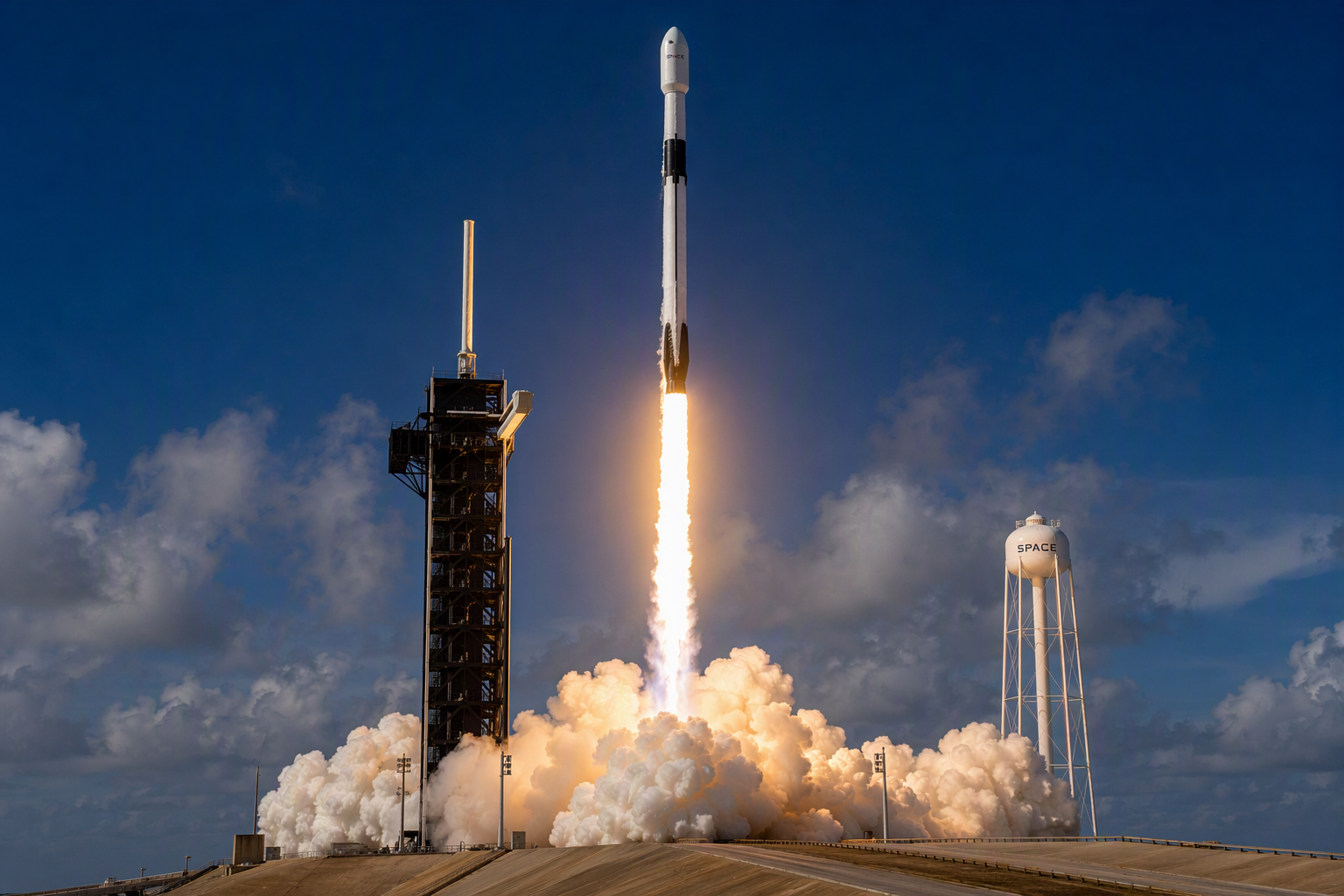
The biggest story on financial markets this year is the explosive launch (Initial Public Offering) of SpaceX’s shares on the Nasdaq stock exchange. As you may have read, as well as being the largest IPO of all time, it has propelled Elon Musk to the status of the world’s first trillionaire – or put another way, he could lose 99.9% of his wealth and still be a billionaire!
The sheer scale of the numbers, the interesting nature of the business and the odiousness of its leader has jumped this story off the business pages and onto front pages. As is often the case with financial stories, we have also seen lots of nonsense being spouted.
Because this subject has come up in a few conversations in the last few days (and to be honest, because I find it interesting), I thought I’d write a quick note answering questions our clients may have.
These issues are also going to be prevalent for a few other mega-IPOs, with Anthropic, ByteDance and OpenAI all due to float on stock markets this year.
Do I own any of it?
Unless you went out of your way to join the frenzy and buy some, probably not. Certainly not in your Collingbourne portfolios anyway.
The numbers are mad though, aren’t they?
Oh yes, they really are.
Space X floated on the Nasdaq last Friday, valuing the company at just under $1.8 trillion.
On Tuesday, after a whole 2 days trading, the shares hit a high of $225 – an increase of 66% on the $135 IPO price. It was briefly the 5th most valuable company on earth. It’s never come close to making money.
To put those figures into some sort of perspective, every $5 movement in SpaceX’s share price is changing the (paper) value of the company by about £50bn. That’s roughly the total value of NatWest or BAE systems.
That 2-day increase in valuation from launch to Tuesday’s highs (over $1 trillion) was more than the total value of HSBC, Astra Zeneca and Shell combined.
As I write this (roughly 3pm on 17th June) the shares are currently $195, about 13% lower than this time yesterday).
Does this mean markets are broken?
Share prices are an equilibrium between buyers and sellers – for every person wanting to buy a share at a given price, there must be someone willing to sell (and vice-versa). However, for any share, the vast majority are not being traded at any given point; only a small amount are being traded and driving the change in price.
This issue is particularly acute with SpaceX. Firstly, only about 5% of the share capital has been floated on the stock market – the other 95% are still owned privately and aren’t tradable.
Just under a third of the floated shares were sold to ‘retail investors’ i.e. individuals rather than financial institutions. You can bet that most of the shares being traded will be those retail investors (who own 1.5% of the company).
The launch has attracted a lot of hype and almost everyone with a mobile share betting trading app will have got involved. The swings in price will be par for the course for the crypto bros and spread betters of this world.
SpaceX shares are far from the first and won’t be the last financial instrument to be rampantly speculated on. This doesn’t mean markets are broken.
Price discovery will gradually assert itself. The hype will calm down and the impact of short-term speculation will slowly abate. Crucially, more shares will enter the market and liquidity will improve. Currently SpaceX staff and early investors are locked in and can’t sell – over the next year these lock-ins will end and more shares will be sold and then traded on markets. Mr Musk himself (owner of almost half the company) is locked in for 366 days from the IPO.
Will I own any of it?
Yes, you probably will in time, but not very much as things stand.
SpaceX shares don’t currently form part of any major stock market indices. This will gradually change, starting with the Nasdaq 100. As different indices include SpaceX shares, so will investment funds which follow these indices. The relevant indices for our clients being MSCI World and FTSE World series.
A key fact here – one missed by a lot of reporting – is that only the shares that are freely traded that generally matter. SpaceX maybe the sixth most valuable company in the world at current valuations, but only 5% of this value will count towards its position in most market indices.
Furthermore, we tilt our portfolios towards small to medium-sized companies, company shares that are priced cheaply (relative to assets and sales) and companies that are profitable (relative to price). SpaceX will not meet any of these criteria, therefore our portfolios will heavily underweight the already small market weighting.
The upshot is, even once SpaceX starts to be included within major indices, our clients’ portfolio exposures will be a fraction of a percent (likely <0.1% of equity holdings until significantly more shares are floated).
This was the case several years ago when we had the last mega-IPO, Saudi Aramco. It was valued at $2 trillion at the time, putting it around about the third largest company in the world. Because only a small amount of its shares (also around 5%) are traded, and due to our portfolio tilts, it typically represents about 0.02% of our clients’ equity portfolios.
Do I need to be concerned?
In a nutshell, no, we don’t believe so.
You won’t currently own any SpaceX shares in your Collingbourne portfolios and you won’t ever own meaningful amounts unless far more shares become available (by which point, market pricing reality will have had a chance to assert itself).
As is usual, our advice is to not worry about short-term market movements or noise in the press. Trust in the long-term power of financial markets to reward those providing their capital to fund human ingenuity and productivity.
If you have any questions about this topic, or any other investment issues, please do get in touch with us using the button below:
Disclaimer:
This document should not be considered a recommendation to purchase or sell any particular investment. Care has been taken to ensure the accuracy of content, but no responsibility is accepted for any errors or omissions. We do not predict or guarantee the future performance of any individual security, investment, portfolio or asset class.